
All Grownsed Up.
The myth of childhood.

My 6 year-old sat me down the other day, surprisingly solemn. He asked, “Dadda, when are you an adult?” I ran through the various ages of majority, concluding that really it was about when we started taking responsibility for ourselves and others but by that point he had stopped listening. Not listening to answers feels like a privilege of childhood but it’s a skill many of us never lose.
Somehow this leads my thoughts to Kier Starmer who recently announced that the UK is will ban under 16s from the main social media platforms, a plan buoyed by a tide of concern about the need not just to protect children but to protect the idea of childhood itself. Was this announcement a last ditch attempt to secure a legacy for Starmer? If so he must hope the plan will survive any change of leadership, unlike his predecessor’s attempt to make smoking illegal with a ban that aged with current teenagers, keeping them in a permanent state of innocence. The idea behind Sunak’s smoking ban fascinated me, subtly implying this generation would somehow remain teenagers for ever.
Childhood is real. There are differences between children and adults, perhaps best captured by the phrase “grown ups”. In simplest terms, we grow, then we don’t, and whatever childhood is, it happens to us when growing and before we are grown up. However growth is personal and its boundaries fuzzier than our idea of childhood allows.
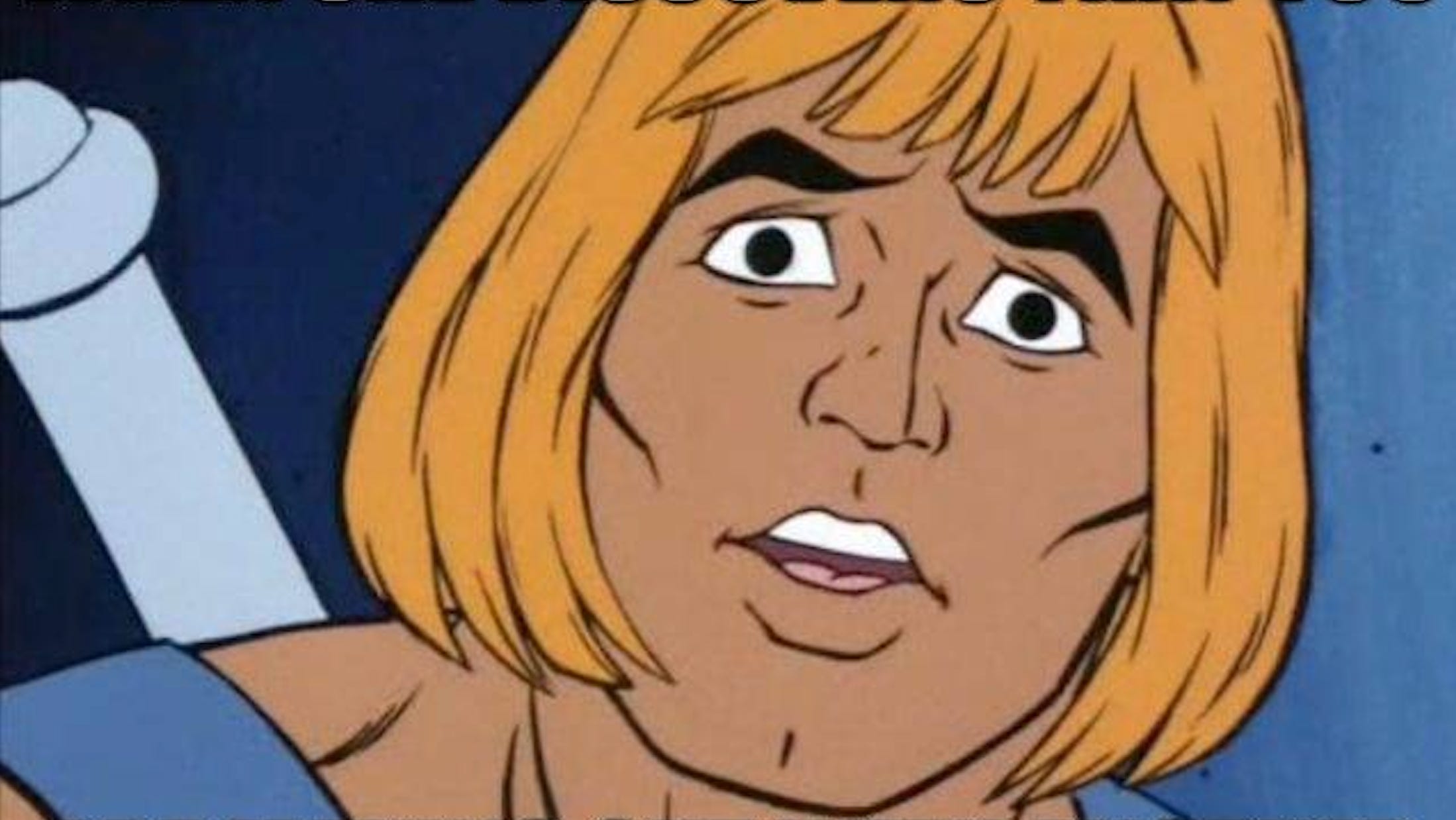
Culturally and legally we have drawn a series of lines. 21 (voting until 1969, still drinking in the US), 18 (voting and marriage), 17 (driving), 16 (sexual consent and joining the army), 15 (watching Backrooms and many other films), 13 (Jewish adulthood) 12 (watching Masters of the Universe as long as you have an “adult” with you who will almost certainly be more interested in the film than you are). Some of these are markers along the journey to maturity, some are supposed to be the threshold after which you are no longer a child. The last is of course an example of a permeable barrier where some in the audience are becoming adults and others returning to childhood. Appropriate considering how He-Man exists in a constant fluctuation between his child and adult identities, able to move into the power of his adult self when needed but never as a permanent state. Sad is the He-Man who must stay muscle-bound protector of Eternia until at last he reaches that autumn where his stamina fades, his reactions slow, his eyes fuzz and with growing horror he realises his inescapable destiny is to become the very skeleton he has fought so hard to defeat.
Our skeletons tend to reach their final size in our late teens but our brains are not fully developed until our mid 20s, around the same time many of us finally meet our wisdom teeth. If childhood is what you experience before you are a grown-up then really it includes the period of time many now use to generate their first weight of lifelong educational debt. Students are children too, the tooth fairy, Father Christmas, a degree, these are all pantomimes we maintain to protect their innocence.
While the path through biological childhood is marked out by a series of transitional boundaries the story of childhood is something else. Being a child is not just being unable to vote, get married, drive or vote. The horror at what technology is doing “to childhood” is more than concern for nervous systems not yet able to cope with or consent to the manipulation they are subject to. It is that this manipulation is tainting the precious state of youth. Children are innocent, they play, they absorb the world through their senses and are free to respond to it instinctually rather than social conditioning. They follow their curiosity, speak truth to power and delight in all the things we find shameful about our aging pooing bodies. The right to this careless freedom is a story. Maturation is biology, childhood is a myth.
The growth arc of humans has barely changed across the millennia but the sense of what childhood is has been utterly rewritten. When Richard II set out to negotiate with his revolting peasants no one seems to have worried that the 14 year-old boy king might be taking on too much or that it might impact his mental health. The sacred childhood that we now panic is being lost did not exist until the invention of industry and capital.
The age of consent was 12 until the high Victorian age and the move to 16 was chiefly an attempt to end child prostitution. Yet this was merely one facet of the horrific and systemic abuse of those born into poverty. As our population was drawn into the grinding teeth of the machine ages so we found we needed to justify why it shouldn’t be the smallest and most helpless amongst us that were its primary victims, forced up chimneys, into looms, absorbing toxins and never living to see the spoils. The story of childhood is the story of bartering with a monster, fine if this must be the way we live then I’ll do it but please not my child, let them play. Childhood is a meal we enjoy watching others eat as we starve. Childhood isn’t really about them at all.
Of course children should be given space to play, to live in the world through their senses, to follow the avenues of their curiosity and delight in all that it is to be alive. Why must maturing bring an end to this? Why protect children from the physical degradation of industry or the psychological manipulation of tech giants when we could protect everyone? If the argument against social media is rooted in the ability to consent then it’s oxymoronic to suggest anyone can consent to psychological manipulation.
The precious state of childhood is a kindness we deny ourselves. We have been convinced that this joy in just living is too much to ask for, but, as my son would say, why?
I was delighted to find that Rotten Tomatoes have placed mine and Chris’ cult film NINA FOREVER at no.75 on their list of the 200 Greatest Horror Movies Of All Time, just sneaking ahead of Robert Eggers The VVITCH. And being a list “Of All Time” I presume this takes into account all future movies as well and as is a permanent recommendation.
My acclaimed 9 week screenwriting course returns from August 28th in a new Friday morning spot information and booking here. Please do message me if you have any questions about how it helps and what sort of writer you need to be to benefit.
As a warning it’s a lot of this sort of thing…