
Unlocking Change.
Reality TV vs the power of polarisation.

My screenwriting course starts again next week and if you’re wondering what it’s like to experience this substack in person with your own creative work at the heart of it, here’s a quick clip of me discussing what it means to kill your darlings…
And yes, I do come good on my promise to teach you how to use the fragments of your inspiration to find your stories true unique shape. Book your place here or just ask me about it in the comments.
Opposites play a fundamental role in the design of a story. For John Yorke the limits of drama, the most dramatic journey a story can follow, is the transition from one state to its opposite. In Christopher Vogler’s tighter delineation of The Hero’s Journey, your Hero must be plagued by their “Shadow”. The perfect antagonist is not just anyone, they need to be an external manifestation of the protagonist’s own negative space, or - er - well - the baddy is the opposite of the goodie.
This idea seems to have been the guiding principle of C4’s latest reality game show “Handcuffed: Last Pair Standing” in which Jonathan Ross handcuffs a group of complete strangers with the promise that the last pair who can bear to remain together get to share £100k. To win the couples must stay locked together at all times, sleeping, showering and defecating in each other’s company, they are mostly required to surrender their phones too. The big twist is that all the contestants have been paired with their ideological opposite, they are each the other’s shadow. So black youth worker Chris must live wrist to wrist with Bob, who had to stand down from Reform after forgetting to dog whistle his online racism, whilst genteel millionaire and classic car buff Anthony is locked together with foul mouthed cleaner and barmaid Tilly.
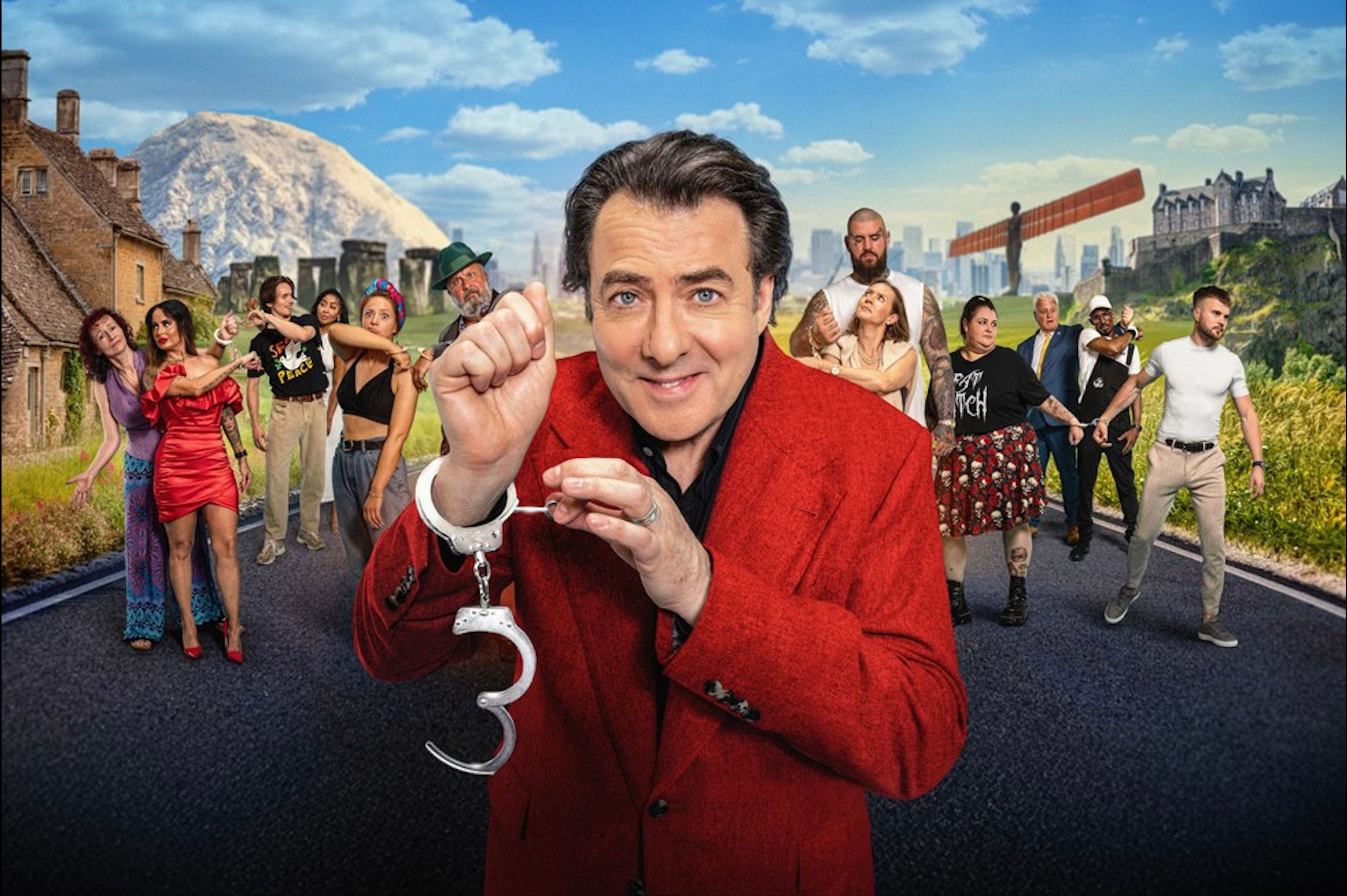
This sounds gloriously trashy but surprisingly Handcuffed plays like reality TV directed by Mike Leigh. The first UK series of Big Brother traded on a pretence to be a serious social experiment, here it is the gameshow element that feels like the act. Fresh from facing his own shadow side in Celebrity Traitors, Ross is keen to stress this is a genuine attempt to get our increasingly divided society to talk, to listen and to find common ground.
There is fuzziness. After her intro monologue, Tilly seems to operate on a normal level of obscene language and if it bothers Anthony he’s too polite to mention it. Similarly, though there is a clear polarity between home maker and “prude” Charlie and Rob, the straight star of gay Only Fans content, once the initial shock has passed their differences are of a kind that don’t create day-to-day obstacles. Charlie meets Rob’s porn pals but doesn’t have to sit in on a filming session and the worst Rob must endure is a very middle-class dinner party. They remain an unlikely couple but the threads of their growing friendship are hard to untangle in the black and white terms the show would wish.
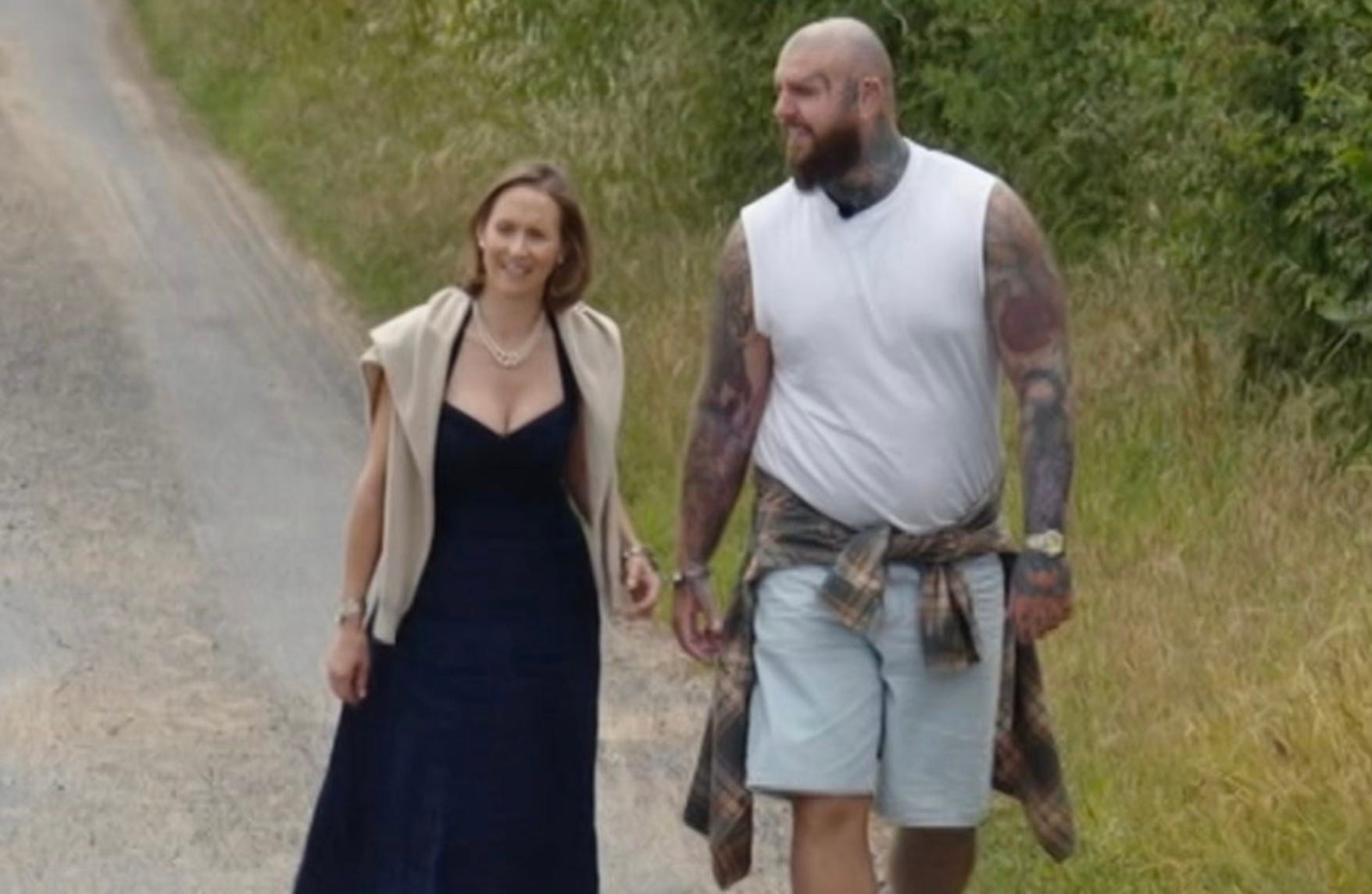
Despite these strains between format and reality, I have to confess to happily binge watching the whole series. It is edited with humane eye, people behave badly but no one is stitched up as a pantomime villain. Even aristocrat Sir Benjamin Slade, who proudly shows off a painting by Hitler, is portrayed as tragic and in need of love he’s not ready to accept. Still, it’s not a spoiler to say that not all the couples make it to the end. Though the series wants to offer up the hope of a Britain reconciled across its many divides, it tends to show that even hard cash won’t keep us together. However, the falseness of the experiment did suggest an interesting twist on that story of opposites.
First I must pause to give one more kick to the ribs of the Hero’s Journey. Handcuffed is a good example of why the externalisation of the opposite that is built into the architecture of the Hero’s Journey is comforting but shallow. Many of the contestants approached this challenge as an attempt to prove themselves right, to defeat their shadow. In this, they fail. The idea that someone who holds the opposite opinion to you is your enemy is precisely what forces us deeper into our difficulties. When we define ourselves by opposition, we force ourselves to become someone else’s shadow.
You could wave this away with talk of how of course life is more complicated than stories, of course there is more to Rob and Charlie than a differing tolerance of butt holes. But stories are an essential part of how we express our existence. We will never lose the need to better define this brief inchoate mess of beingness we experience. Better then to accept the Aristotelean principle of unity, not of people, but of stories. Good stories are simple. Good stories present one idea. Perhaps from multiple perspectives and multiple characters, perhaps 18 different people who all get handcuffed together by a man in a big coat. Within that story the power of opposing ideas and actions is what illuminates the truth but the story contains both poles. There is no love story that isn’t also a hate story. There is no story of death that isn’t also about life. Both Charlie and Rob had been scared and scarred by the events of their lives and both sought forms of protection. Their choices were opposites, their problems were not.
With the couples in Handcuffed who willingly gave up on their chance of sharing £100k, it was never the ideological difference that tipped them over the edge. It was the constraint. Which isn’t to say that there weren’t arguments, or that differences were resolved, just that what mainly caused the rupture was the fury and frustration of being out of control. The existence of opposites isn’t the problem, the problem is the loss of autonomy, it’s the handcuffs that drag us against our will.
This is the truth of Brexit. Yes racism but also no not racism, yes education but also no not education, yes opportunity but also no not opportunity. The truth is that half the country felt out of control, felt handcuffed to strangers who weren’t acting out of shared interest and grabbed at the first key put on the table. This was just the first open battle in a culture war that still pulls us apart but the answer is not to vanquish the opponent by proving yourself more right. For all her rages, working class Tilly didn’t force her worldview on millionaire Anthony; in the series’ most moving sequence, she allows him the space to confront his own prejudices by letting him share her mission, cooking for the homeless. The answer is not to win by being more right, but to dissolve the fight by being more kind.
“The answer is not to win by being more right, but to dissolve the fight by being more kind.” 💙